Colonial Financial Infrastructures
COLFIN
Finance and colonialism are deeply interconnected. Modern finance emerged with the new time horizons and geographical circulations of colonial expansion and exploitation. While this link has been recognised, the violence of colonialism is often overlooked in financial histories and international political economy.
The ERC-funded COLFIN project focuses on the ways in which modern financial technologies are shaped by and through colonial practices of exploitation and appropriation. The project’s approach focuses on financial infrastructures (Westermeier, Campbell-Verduyn and Brandl 2025), combined with postcolonial political theory (Rutazibwa and Shilliam 2018). This means that COLFIN is not so much interested in the question how much profit was made exactly, and more in the question: how are modern financial payment and speculative technologies shaped by the colonial and exploitative contexts in which they emerged?

COLFIN has a longue-durée perspective and a focus on material technologies. It examines the experimental beginnings of modern finance. It tackles questions such as:
- How were modern financial techniques developed through racialised dehumanization and commercialization of enslaved lives?
- How were transnational payments routed and organized during early modern colonialism, and how did this shape durable power relations?
- How did the specific time horizons and new uncertainties of the triangular trade foster financial innovation and colonial exploitation simultaneously?
In order to unpack present relevance, COLFIN draws on the work of Laura Ann Stoler (2016). Stoler defines imperial durabilities as complex and non-linear resonances of colonial pasts, with durable impact in the present.
COLFIN focuses on transnational early modern public-private transnational companies such as the Dutch and British East India Companies. It uses mixed methods including digital financial forensics and qualitative case studies. It draws on newly digitised archives from transnational colonial companies, for example the GLOBALISE resources.
-
Preparing the Archive
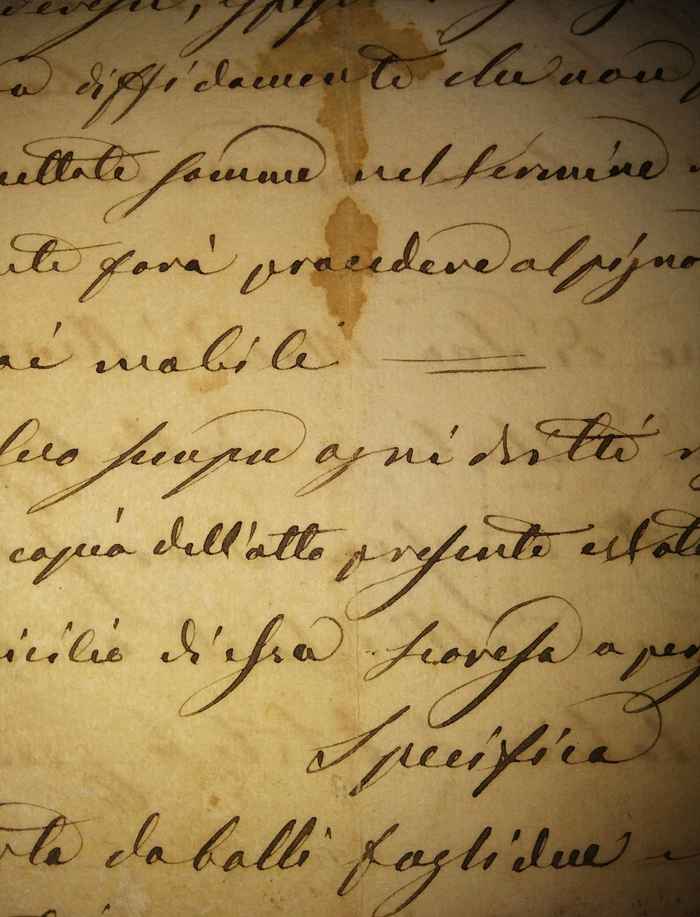
Colonial archives are accounts and records of power-holders. They have many biases, gaps and silences. Currently, many archives of colonial trading companies and colonial administrations are being digitized. This includes the protocols, accounting books, credit records and ledgers of large colonial companies like EIC, VOC and the South Sea Company. Digitization may range from offering online or onsite availability of scanned pages of original parchment and leather-bound volumes, to offering full transcription of early modern handwriting accessible via online search portals to allow online text mining. The latter is done in GLOBALISE. Digitization is not a neutral practice: it affects how archives can be accessed, read and analysed. This sub-project compiles a technical and critical description of relevant archives to international political economists, and maps their level of digitization. The project also analyses and theorises the silences of the colonial archive, and offers recommendations how to navigate these.
-
Credit
From the early seventeenth century onwards, new instruments of credit and loan were created. The profit opportunities of colonial expansion in the first half of the seventeenth century required waiting for longer periods, and engaging networks over greater distances. They also involved ever larger amounts, divided into tradeable shares and stock. Returns could be substantial but involved new uncertainties and experimentation. It is well known that the invention of modern credit caused political upheaval and widespread societal anxiety. The ‘fictitious’ paper wealth of stocks, shares, and paper money led to early modern cycles of boom and bust. Yet the colonial aspects of financial crises remain under-explored. COLFIN focuses on credit infrastructures as a rapidly evolving technique of finance, and reconnects these to their colonial histories.
-
Currency
The colonial enterprise and its extractive economy required and generated new forms of payment and currency. Payments had to be made over greater distances and time horizons, through networks of local forts and factors. Private company-states like the VOC issued their own coin. The stamped coins are a site for the visual circulation of the colonial authority’s marks. Issuing currency moreover offers economic advantage through the right of seigniorage. It is known that colonial dependencies remain present within contemporary payment routes. This sub-project analyses experimentation in currency and payment technologies in relation to colonial extraction and appropriation. The objective is to analyse material technologies of selected colonial currency and asks how these supported exploitation and rule.
-
Collateral/Securitisation
Collateral concerns the material goods or possessions that are pledged as a security for a loan. Collateral is at the basis of practices of financial securitization. Collateral is a material practice and a legal technique that makes new scope and shapes of credit and payment possible. Plantations and slaves’ lives could be sources of collateral for loans. This sub-project asks about practices of securitization and collateral in relation to early modern financial infrastructure. It unpacks the racialized juridical technologies that rendered colonial possessions and the lives of the enslaved into collateral for loans and credit instruments.
-
Colonial Durabilities, Art and Finance
This sub-project contributes to dialogue about colonial financial durabilities in the present through artistic research and stakeholder engagement. It relates to a strong tradition in critical political economy that values creative productions as a way to challenge current structures. Artistic research involves participatory, practice-based methods to generate analysis and understanding from unexpected perspectives. Museums and art spaces have been at the forefront of enabling diverse publics to engage with the colonial durabilities of finance, for example the Someone is Getting Rich exhibition at Wereldmuseum in 2024. COLFIN works with societal partners, including museums and advocacy organisations, to bring research findings to broad audiences through artistic production and public debate.
Read more
- Finance/security infrastructures
- Infrastructural Geopolitics
- Payments and Hegemony
- Virtue, Fortune, and Faith
COLFIN started on August 1, 2026 and further publications are forthcoming.
Advisory Board
Collaborations
Within the University of Amsterdam, COLFIN participates in the transdisciplinary networks of the Critical Infrastructure Lab, the Decolonial Futures Research Priority Area, and the Amsterdam Center for European Studies (ACES).
Interested?
Get in touch with: