Social Engagement
Amsterdam Institute for Social Science Research
AISSR researchers are deeply engaged with society. Through policy advice, public debate, education, civil society initiatives and collaborations with public and private partners, they actively translate social science knowledge into societal impact.
Below is a selection of concrete examples of AISSR social engagement and valorisation, illustrating the diversity of ways in which our researchers contribute to societal challenges in the Netherlands and beyond.
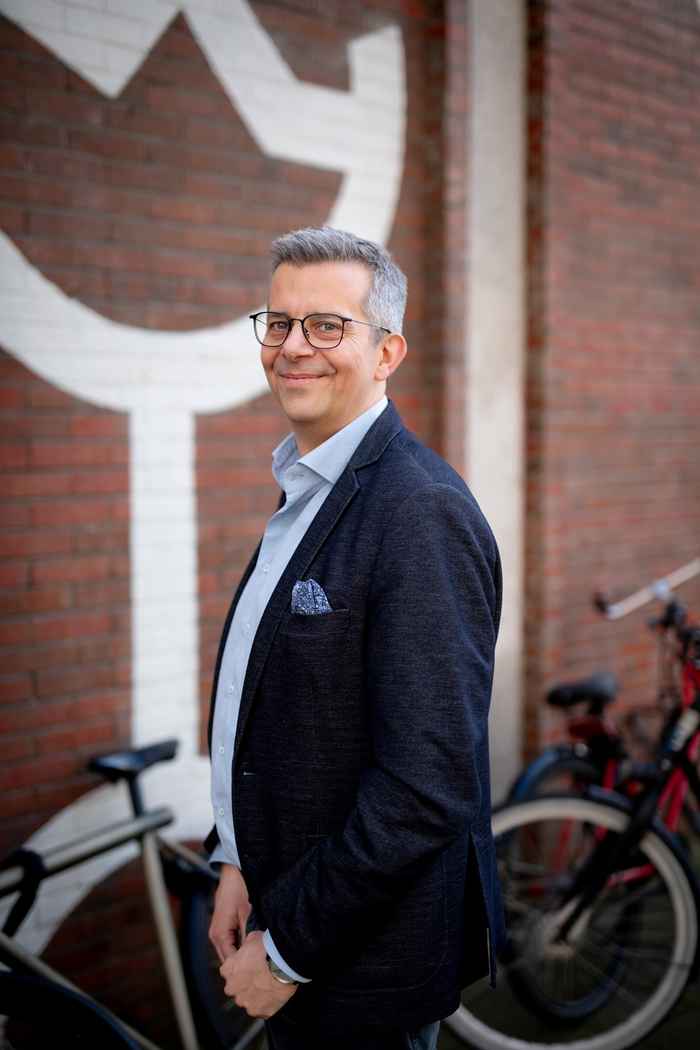
In the collaborative research project Just Prepare, Imrat Verhoeven examines how the energy transition can be made fairer and more effective, particularly in vulnerable neighbourhoods.
-
Stan Majoor & Imrat Verhoeven | Energy transitions in urban neighbourhoods
Within their research project Just Prepare (Putting REsident Practices And REsidential areas at the centre of a just and effective energy transition), Stan Majoor and Imrat Verhoeven work with municipalities, housing corporations, residents and other societal partners to address the energy transition in underprivileged neighbourhoods.
The project focuses on mismatches between housing retrofits and residents’ everyday energy practices, and between residents and the actors designing and implementing energy solutions.
Through Living Labs in neighbourhoods in Amsterdam-Zuidoost, Rotterdam Bospolder-Tussendijken, Nijmegen and Gemert, the project develops and tests solutions that improve both the effectiveness and justice of the energy transition, including fair distribution of costs and benefits, meaningful resident participation and recognition of vulnerability. Insights are shared and scaled up through a Learning Lab with municipalities, businesses and other stakeholders, supporting broader application in policy and practice.
-
Marco te Brömmelstroet & Meredith Glaser | Global cycling culture & sustainable mobility
Marco te Brömmelstroet and Meredith Glaser bring Dutch cycling knowledge to an international audience through the Urban Cycling Institute. Via widely followed MOOCs, summer schools, policy advice and public engagement, they support cities worldwide in rethinking mobility systems towards more sustainable, people‑centred transport.
-
Nanke Verloo | Inclusive urban governance and citizen–state relations
Nanke's research brings together anthropology and political science to improve interactions between citizens and the state, with a focus on inclusive, equitable and democratic urban governance. She leads collaborative research with the Municipality of Amsterdam and the Amsterdam University of Applied Sciences (HvA), where researchers, civil servants and citizens jointly study participation policies and co-develop more inclusive governance strategies.
In 2024, she was awarded an NWO Impact Explorer grant to actively translate research insights into practice, including training professionals, producing accessible publications and engaging local policymakers. Verloo also connects research and practice through professional education as Dean of Metropool at the Netherlands School of Public Administration (NSOB) and through contributions to public debate on participation and democracy.
-
Bowen Paulle | Educational equality through high‑dosage tutoring
Bowen Paulle co‑founded a foundation dedicated to high‑dosage tutoring for children in disadvantaged situations. Drawing on social science research, the initiative achieves demonstrable improvements in educational outcomes and contributes to evidence‑based debates on inequality and schooling.
-
StukRoodVlees | Academic knowledge in public debate
Stuk Rood Vlees is a prominent Dutch blog that intervenes rapidly in current affairs while remaining firmly grounded in social science research.
Contributors such as political scientists Tom van der Meer, Armen Hakhverdian, Matthijs Rooduijn and Gijs Schumacher have fundamentally reshaped public debates on opinion polling, elections and political change, bringing robust empirical analysis into the media landscape.
-
Roanne van der Voorst| Futures-anthropologist
Roanne applies anthropological insights to business, institutional strategy, and public outreach — including through her internationally distributed podcast The Emic – Anthropological Stories from the Field (available on Apple Podcasts, Spotify, etc.), where she and anthropological colleagues share fieldwork narratives that illuminate societal issues and make social science accessible to broad audiences.
The Emic explores how people around the world live and work from the insider (“emic”) perspective, connecting academic research with real-world experiences and inspiring reflection across disciplines and publics. Beyond her academic work, Roanne’s engagement stretches to writing, creative formats, and public lectures that bridge research and societal debates.
-
Cody Hochstenbach | Urban geography and housing inequality
Cody's research focuses on how housing systems reflect and reproduce social inequality, from gentrification and homelessness to policy debates on access to adequate, affordable homes. His work combines political-economic analysis with empirical field research to inform debates on spatial justice and urban policy.
As a public voice on the housing crisis, he is the author of Uitgewoond and a regular contributor to media, public forums, podcasts and policy discussions across the Netherlands. He also works with DAS Mag, a platform that connects social science research with public narratives on cities and housing, further widening the reach and societal impact of his research.
In addition to his academic leadership — including his role at our Amsterdam Centre for Inequality Studies (AMCIS) — his work actively bridges scholarship, media and policy to support evidence-based urban reform.
-
Amade M’charek | Care and dignity for drowned migrants
Amade M’charek, Anthropologist of Science whose work explores the entanglements of race, forensics, and postcolonial politics, founded Stichting Drowned Migrant Cemetery (DMC), an initiative dedicated to creating a respectful and dignified burial place for migrants who have drowned while crossing borders, primarily in the Mediterranean.
The foundation works to recognise and commemorate lost lives, challenge the anonymous status of many drowning victims, and engage public awareness around migration, borders and human rights.
-
Joyeeta Gupta | Global sustainability and climate governance
Joyeeta Gupta is closely involved in United Nations processes, leads large-scale international research programmes and speaks at global policy forums such as the World Economic Forum in Davos. Her work on climate justice and sustainability governance has been recognised with major awards, including the NWO Spinoza Prize.
In addition to her academic leadership, she serves as Co-Chair of the Earth Commission and was appointed as one of the United Nations’ 10 High-Level Representatives of Civil Society, the Private Sector and the Scientific Community (10-Member Group) for 2024–2025, advising on science, technology and innovation for the Sustainable Development Goals.
-
Christian Bröer | Innovation in public opinion research and survey methodology
Christian 's research focuses on public opinion, political behaviour and survey methodology, including applications in health, wellbeing and quality-of-life measurement.
He co-founded Panel BV, a spin-off that develops innovative tools for survey research and opinion measurement, translating academic expertise into practical methods used by organisations and practitioners.
Bröer's work also advances methodological standards in social science through academic publications, editorial leadership and collaborations with international research consortia. His engagement helps bridge rigorous academic research with better measurement tools for public policy, health surveys, community engagement and evidence-based decision-making.
-
Margreet Zwarteveen | Water Governance
Margreet Zwarteveen is Professor of Transformative Water Governance, exploring how rethinking our relationship with water can contribute to a safer, more biodiverse and more fair society.
Professors by Special Appointment
The AISSR hosts a number of Professors by Special Appointment (Bijzonder Hoogleraren). These are part‑time professorships funded by external organisations such as foundations, public institutions or societal organisations rather than by the university itself.
These chairs typically focus on specific societal themes and play an important role in strengthening the connection between academic research and professional practice.
-
Alyt Damstra | Digital Media and Society
Alyt Damstra is Special Professor of Digital Media and Society, exploring the social, cultural and political implications of digital platforms, media infrastructures and datafication. Her work bridges academic research with civil society initiatives, industry engagement and public conversations about responsible technology, media literacy and digital inclusion.
- Femke Roosma | Dr J.M. den Uyl Chair
- Ward Berenschot | Comparative Political Anthropology of South and Southeast Asia
-
Stan Majoor | Urban Energy, Inequality and Society
Stan Majoor is Special Professor whose research focuses on the social and political dimensions of urban energy transitions, inequality and housing justice. His work engages with communities, policymakers and practitioners to co-develop more equitable energy solutions in cities, building on collaborative research such as Just Prepare and broader urban sustainability agendas
- Francio Guadeloupe | Public Anthropology
-
Femke Kaulingfreks | Wibaut Chair
Professor by Special Appointment in the Wibaut Chair, focusing on moral philosophy, urban life and citizenship, with strong engagement in public debate on democracy, social justice and living together in the city of Amsterdam.
- Henk van der Kolk | Electoral Politics and Democratic Innovation
- Klaas Schwartz | Water Services Governance
- Wim Bernasco | Crime, Policing and Spatial Analysis
-
Monique Kremer | Active Citizenship
Special Professor of Active Citizenship, whose work connects academic research to policy and practice on citizenship, participation, migration and the welfare state, including advisory roles for governments and societal organisations.
- Mark Jordans | Global Child and Adolescent Mental Health
-
Mayke Kaag | Anthropology of Islam in Africa and its Diaspora
Mayke Kaag is Special Professor of the Anthropology of Islam in Africa and its Diaspora. Her work explores religion, citizenship, heritage and social change across diverse African and diasporic contexts, linking anthropological research with public debate, cultural institutions and policy discussions on diversity, inclusion and social cohesion.
-
Arnoud Verhoeff | Political Philosophy and Public Debate
Arnoud Verhoeff is Special Professor of Political Philosophy, focusing on democratic theory, social justice and the ethical foundations of political life.
His engagement spans academic teaching, public lectures and contributions to societal debates about democracy, citizenship and the common good.
-
Dorien Manting | Family, Gender and Life Course
Dorien Manting is Special Professor in research on family relationships, gender dynamics and life course transitions. Her work connects academic insights with policy and practice on parenting, gender equality, work–family balance and social wellbeing, contributing to evidence-based discussions in both scholarly and public arenas.