Decolonizing Democracy: India, Israel, and Decolonial Futures
Lecture by Prof. Irfan Ahmad
- Date
- 10 September 2025
- Time
- 16:00 -18:30
- Room
- B5.12 (Common Room Anthropology)
- Organised by
- Francio Guadeloupe
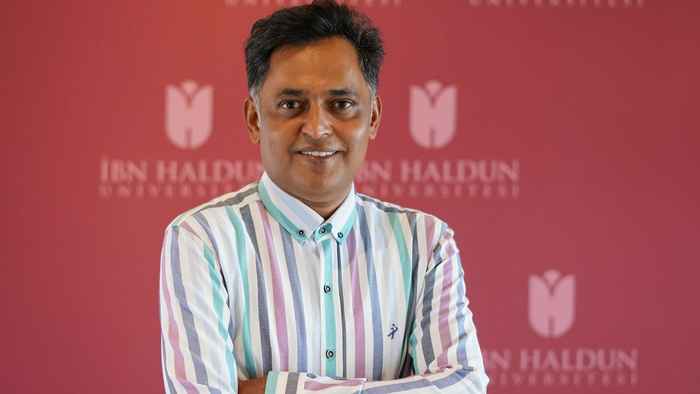
How do we reckon with the fact that systems called ‘democratic' are increasingly aligned with projects of exclusion, hierarchy, and colonial domination? What would it mean to decolonize democracy itself? And how do the growing ideological and political connections between Hindutva and Zionism shape these global realities?
This lecture by Prof. Irfan Ahmad, a leading anthropologist and critical thinker of our time, offers exactly that. He delivers a decolonial critique of democracy and offers a bold vision of its radical reinvention.
An unnoticed fact about democracy worldwide, including India, is that its history as well as its conception continues to be mostly undemocratic. Its dominant tale is, therefore, laced more with bombastic adjectives than with critical reflections.
Based on a thick notion and praxis of justice, in this talk Ahmad presents a decolonizing account of democracy to imagine a polity/polis as a beautiful garden where flowers of all colors are endowed with a capacity to bloom.
Taking the case study of India signed by cultural, religious diversity, he argued that to decolonize democracy is to radically orient it to a power-sharing model. To this end, he harnesses resources from history and anthropology-sociology of consociational democracies – especially, the Netherlands – to craft a democratic vision of democracy – one that is resonates with precolonial political traditions beyond India.
This vision premised on “power-with” rather than “power-over” arguably is an antidote to contemporary dark populism and India’s ethnic democracy mimicking the Westminster model and relentlessly activating Hindu supremacism.
The talk offers comparative notes on India and Israel, respectively the world’s “largest democracy” and the “only democracy in the Middle East.”
About Irfan Ahmad
Professor Irfan Ahmad is a distinguished academic in the field of Anthropology-Sociology at Ibn Haldun University. He has held the position of Professor of Sociology at the university since March 2022.
Prior to this, he was a Senior Research Fellow at the Max Planck Institute for the Study of Religious and Ethnic Diversity in Germany and has served in various academic positions at Australian Catholic University and Monash University.
Prof. Ahmad completed his Ph.D. in Anthropology from the University of Amsterdam and has an extensive publication record, including works on Islamic critical thinking, democracy in India, and the transformation of Jamaat-e-Islami.
He is known for his critical approach to conventional sociological theories, especially in the context of Islam and modernity. His academic journey reflects a deep engagement with issues of religious and ethnic diversity, nationalism, and the interplay between religion and politics.