IMPULSE spotlight: Line Kuppens
Imagining Just Futures for an Unjust Past
19 March 2026
To support early-career researchers following the discontinuation of national starter and stimulation grants, the AISSR launched its own funding scheme: IMPULSE grants.
Impulse Spotlight
In this IMPULSE Spotlight series, we highlight the researchers behind these IMPULSE projects: what drives their work, why it matters, and the impact they hope to make.
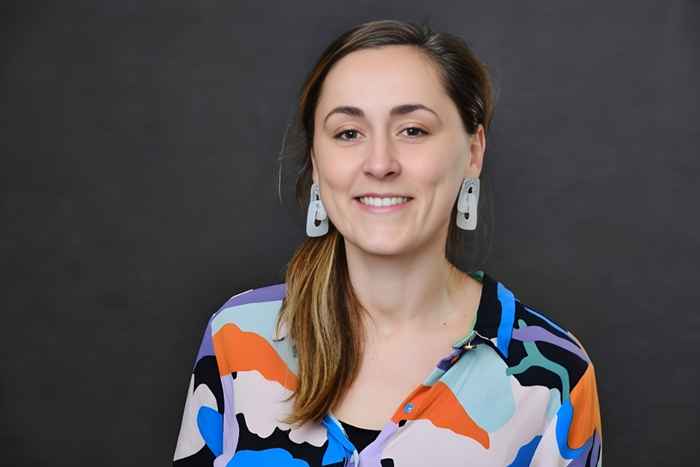
In this edition, we speak with Dr. Line Kuppens. Her project explores how students in the Netherlands and Belgium engage with colonial pasts through a futures-oriented classroom approach, asking not only how we remember history, but how we might imagine more just futures.
Why is this research important right now?
‘Everything passes, except the past’ is inscribed prominently at the entrance of the Royal Museum for Central Africa (Africamuseum) in Tervuren, Brussels: a powerful reminder that colonial history continues to shape the present.
Yet in both Belgium and the Netherlands, colonialism is still often taught as a closed, ‘sad’ or ‘dark’ chapter of national history, Line explains.
At the same time, the legacies of colonialism remain visible in ongoing discrimination, racial inequalities, and processes of “othering”. As public debates increasingly call for re-examining national narratives and addressing historical injustices, her project is both timely and urgent.
By empirically testing an innovative, futures-oriented pedagogy in classrooms - and extending it into the public sphere through an exhibition - her project addresses a key societal question: how can we engage with colonial pasts in ways that activate rather than immobilize, and that support constructive engagement with questions of redress today?
Within my field, the project contributes empirical evidence to an area that is currently dominated by strong normative claims but limited classroom-based research
What impact do you hope the project will have?
‘Within my field, the project contributes empirical evidence to an area that is currently dominated by strong normative claims but limited classroom-based research’, says Line.
While futures-oriented approaches hold strong theoretical promise, they remain underexplored in practice. By bringing this methodology into the classroom, her project generates valuable insights into how students respond and what challenges teachers encounter. These findings contribute to scholarship across history education, memory studies, and critical pedagogy.
However, the most important impact, Line emphasizes, is on the students themselves. By inviting them to imagine a future in which their societies have meaningfully addressed colonial injustices, the project moves beyond narratives of guilt or closure. Instead, the students are encouraged to recognize how colonial histories continue to shape the present, while developing a forward-looking sense of collective responsibility.
Line's project will culminate in a public exhibition in Amsterdam, co-created with students and artists, showcasing the outcomes of this future-oriented work. In doing so, it actively bridges the gap between academic research and society.
‘The accompanying research component will assess whether encountering these future-oriented narratives influences visitors’ attitudes toward policies for redress, thereby connecting classroom innovation to broader societal debates.’
How would you explain your research at a dinner party?
‘I would turn it into a thought experiment’, Line says. She invites her dinner partners to imagine themselves as a museum curator in the Netherlands or Belgium fifty years from now, designing an exhibition marking the moment the country came to terms with its colonial past. What would that exhibition show? Which societal changes made that moment possible? And more importantly: if those are the milestones of the future, what does that mean for what still needs to change today?
‘Instead of teaching colonial history as a closed “dark” chapter, I ask students to imagine a future in which countries like the Netherlands and Belgium have genuinely addressed the legacies of colonialism. By stepping into the role of museum curators, they think creatively and critically about what justice and reconciliation would actually require’, Line explains.
‘I then study whether this exercise changes how students see the present: does it make them more aware of how colonial history still shapes society today? Does it encourage a sense of shared responsibility? And does it increase their openness to measures like public apologies or reparations?’
By inviting students to imagine a future in which their societies have meaningfully addressed colonial injustices, the project moves beyond narratives of guilt or closure
Looking ahead
Over the next two years, Line will develop a lesson plan based on this futures-oriented pedagogy, which will be implemented in twelve classrooms across the Netherlands and Belgium (six schools per country). The project will then expand into a co-created public exhibition, open to visitors for three months. Finally, visitor responses will be analysed and translated into an academic publication.
Meet the Researcher
Line Kuppens is assistant professor of Conflict Studies at the Governance and Inclusive Development Programme Group (GID) of the University of Amsterdam, and board member of the Amsterdam Centre for Conflict Studies (ACCS).
Her research focuses on the role of education in conflict-affected and post-conflict societies, with particular attention to peace education, reconciliation, and how teachers address contested or violent pasts in the classroom.
She also studies the intergenerational transmission of collective memories and youth aspirations in conflict-affected contexts.
Her work has been published in journals including African Affairs, Globalisation, Societies and Education, International Journal of Educational Development, and Education, Citizenship and Social Justice.