Community-Engaged Learning
- Date
- 6 March 2026
- Time
- 09:30 -15:30
- Location
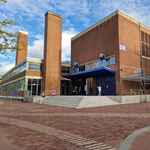
- Roeterseilandcampus - building J/K
- Room
- The Floor, REC Impact
Programme
- 09:30-10:00: Walk-in with Light Breakfast
- 10:00-11:00: What is Community-Engaged Learning (CEL)?
In this opening session, facilitators will clarify what CEL is—and what it is not. Rosanne van Wieringen and Katusha Sol from UvA’s Institute for Interdisciplinary Studies will join us to compare CEL with UvA's existing transdisciplinary and impact-learning frameworks. After discussing key principles and concrete models, the session transitions into a forum-style Q&A conversation. This session establishes shared language, expectations, and values for incorporating CEL into diverse teaching contexts, setting the foundation for remaining CEL workshops.
- 11:00-11:15: Coffee Break
- 11:15-12:15: Building Sustainable Partnerships
This forum-style session explores core practices for developing ethical, mutually beneficial community partnerships. Invited community partners and facilitators, including Debby Gerritsen and Tjerk Jan Schuitmaker from the Change Making Community of Action, will share concrete strategies, examples, and lessons learned, emphasizing power dynamics, reciprocity, and asset-based approaches. Participants will gain practical guidance for identifying and cultivating long-term, sustainable partnerships that support student learning and community priorities.
- 12:15-13:15: Networking Lunch
This informal networking lunch connects UvA staff and invited community partners across shared interests. Structured conversation prompts will be provided to support brainstorming potential collaborations, community-driven questions, and future CEL projects. Participants will begin forming relationships that can inform future CEL course collaborations.
- 13:15-14:15: Assessment and Critical Reflection
Assessment and critical reflection are central to meaningful CEL. This session presents assessment strategies adaptable to different teaching contexts, including large lectures. Through hands-on case studies, participants will practice selecting appropriate assessment methods, designing meaningful reflection opportunities, and ethically involving community partners in evaluation processes.
- 14:15-14:30: Coffee Break
- 14:30-15:30: Course Mapping
This hands-on session invites participants to translate the principles of CEL into concrete course plans. Participants will outline course learning goals, identify potential community partners, consider the scope of community-driven projects, and map where critical reflection and assessment will occur across the course. Participants will receive feedback on feasibility, alignment, and opportunities to strengthen reciprocity and student learning.
Registration
Flexible registration: Participants may register for the full program or select specific components.
Support
This workshop is supported by an FMG Impact in Education Seed Grant, the Institute for Interdisciplinary Studies, and the SIG Fair, Resilient & Inclusive Societies (FRIS)
Workshop facilitators
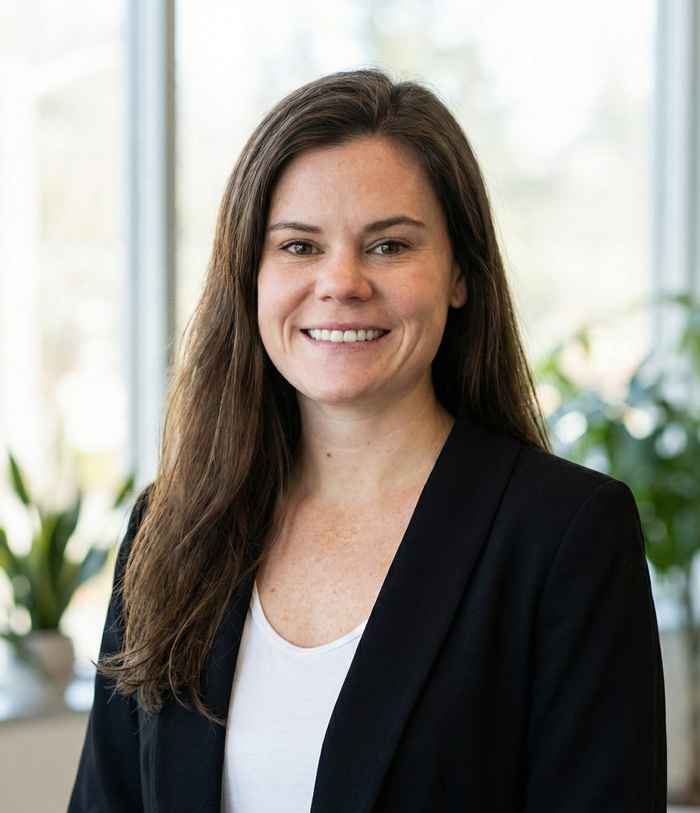
Brooke Covington, PhD
Dr. Brooke Covington is an Assistant Professor of English at Christopher Newport University (U.S.A.), where she teaches writing and leads community-engaged teaching and learning initiatives. She serves as Academic Director of the Center for Community Engagement and Director of the Civic Engagement and Social Justice minor, focusing on building partnerships between the university and local communities that feel reciprocal, responsive, and human. Brooke teaches courses in rhetoric and composition, community literacy, professional writing, and community-based journalism. Through her teaching, she invites students to connect academic inquiry with community-driven priorities, emphasizing deep respect for local knowledge and collaboration that unfolds at the pace of relationships. Her scholarship examines public memory, narrative medicine, and institutional approaches to community engagement. Much of her work grows directly from long-term partnerships with regional nonprofits and the small, steady practices that make community-engaged work meaningful.
Federica Bono, PhD
Dr. Federica Bono is an Assistant Professor of Human Geography in the Department of Geography, Planning, and International Development Studies and member of UvA’s Political and Economic Geographies Research Group. Federica is the coordinator of the new Community-Engaged Master in Spatial Analysis (Human Geography) which addresses community-identified priorities through GIS while maintaining a commitment to the public good. As an educator she is especially committed to an inclusive and engaged pedagogy that emphasizes active learning and centers social justice and reciprocity in university/community relations. Currently, she is involved in a project that experiments with the use of AI to foster deeper student reflection allowing students to discover their own positionality in the world and connect their lives and experiences to course content. Her research analyzes everyday informal and solidarity relations within social reproduction and their embeddedness in geopolitics at different scales - from the embodied to the territorial.