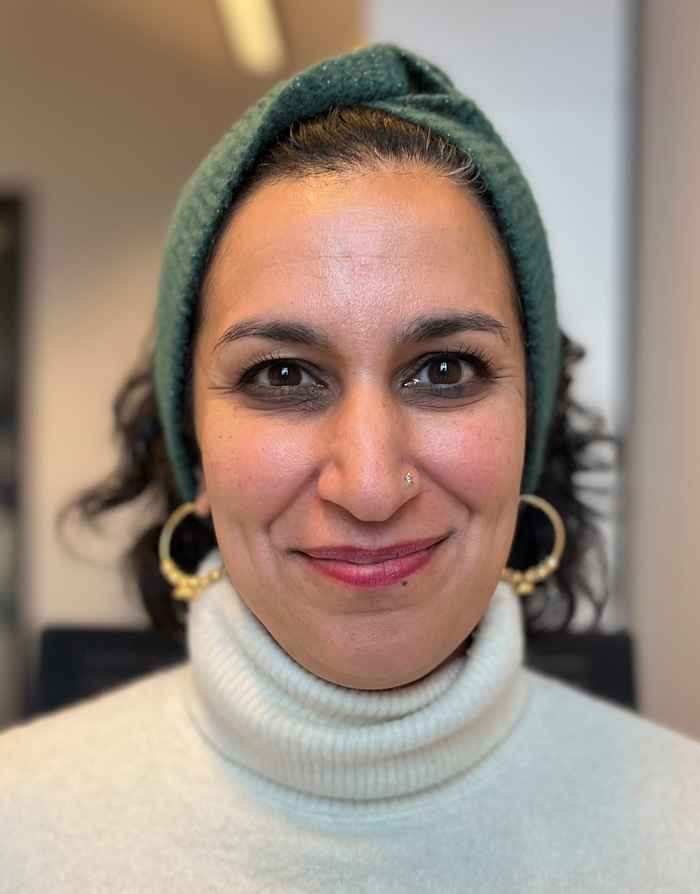
Kiran Grewal appointed Professor of Political Sociology
20 January 2026
Delivering justice
Grewal studies how people organise, protest and imagine alternative futures when trust in institutions is low. She began her career as a lawyer with an ambition to specialise in human rights, working in regions affected by war and mass human rights violations. These experiences led her to question the limits of legal frameworks in delivering justice. ‘I began to pay more attention what happens beyond the courtrooms. Through this, I’ve been drawn into research about social, cultural, and political processes that both contribute to violence and help fight against it.’
Much of what we have taken for granted since the post-war period is now being questioned, and responding to this requires new ways of thinking.Kiran Grewal
The divide between institutions and populations
Grewal sees her appointment as particularly timely. ‘Much of what we have taken for granted since the post-war period is now being questioned, and responding to this requires new ways of thinking’, she concludes. ‘Many people are unhappy with the current state of politics and want to see change. To make this possible we need to create spaces where people can think critically, discuss issues and share new ideas.’
Her research explores the divide between institutions and populations. Grewal: ‘For example, the disconnect between public opinion and State actions in relation to the genocide in Gaza, the failure of political leaders to meaningfully address the environmental crisis, and rising wealth inequality.’
New ideas about politics in uncertain times
Alongside her research and teaching, Grewal is keen to engage with students, colleagues and others beyond the university. She also looks forward to connecting academic debates with social and political questions emerging locally in Amsterdam’s diverse urban context. Through her chair, Grewal aims to contribute to the development of new ideas about politics in uncertain times.