A faster transition away from gas starts with listening to residents
Imrat Verhoeven explains why the question ‘How are you?’ is so important for the energy transition
5 February 2026
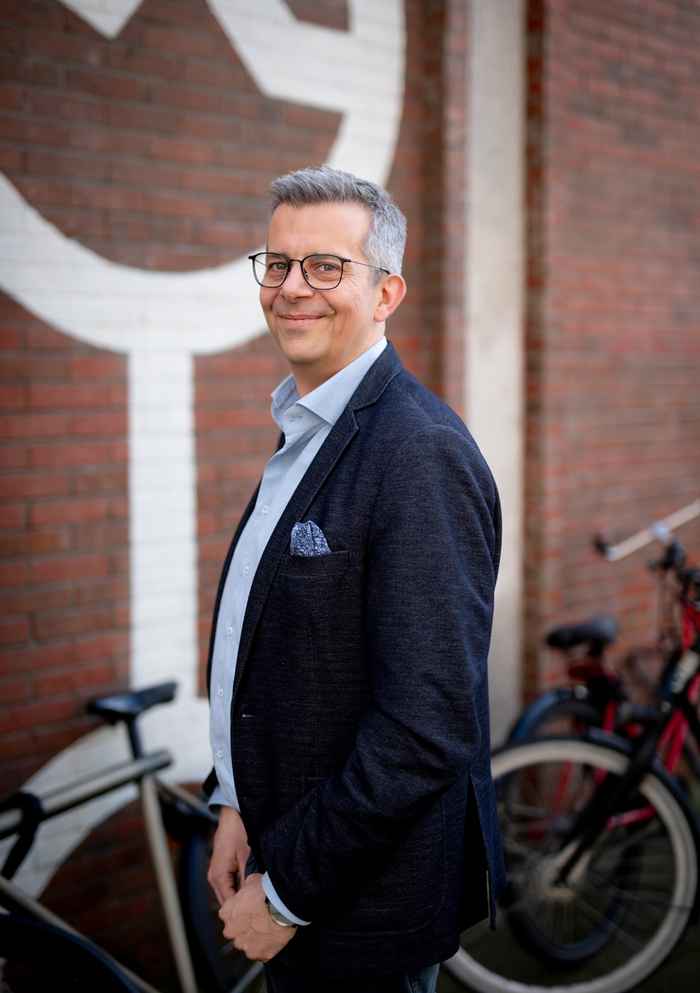
As an expert in governance and public policy, Verhoeven is involved in the research project Just Prepare. The project grew out of long-term collaboration with practice partners working on the energy transition, including within Energy Lab Zuidoost in Amsterdam. Just Prepare brings together four universities, two universities of applied sciences and a wide range of practice partners. The research focuses on neighbourhoods with many low-income households. Making homes more sustainable in these areas is especially complex. Not because residents oppose sustainability, but because the consequences can be significant, particularly for household finances. ‘If energy costs increase by €50 a month, for some people that simply means having less money for food,’ says Verhoeven.

Switching from cooking on gas to cooking on induction may seem minor, but for people it is part of their everyday lives.Photographer: Anneke Hymmen
From gas to induction
Challenges also arise in very practical aspects of daily life, such as cooking. In many plans, housing associations replace gas cooking with induction. From a technical perspective this makes sense, but it is not always self-evident for residents. ‘If you are used to cooking on gas, for example with a wok, induction suddenly feels very different,’ says Verhoeven. ‘That may seem like a small change, but for residents it affects their daily routines.’
Justice
Justice is central to the Just Prepare project and is understood in several ways. It focuses on three key questions:
- Who bears the costs and who benefits? Is there a risk that residents will (further) fall into energy poverty?
- Do residents have a voice? To what extent can they contribute ideas and take part in decision-making about plans that significantly change their homes and living environment?
- Are residents seen and taken seriously? Is there genuine attention for their questions about daily life, concerns and lived realities?
Because residents’ questions and problems were taken seriously and addressed, trust was able to develop.Photographer: Anneke Hymmen
A positive example
In the Bospolder-Tussendijken neighbourhood in Rotterdam, the transition away from gas is progressing remarkably smoothly. This is largely due to the third form of justice: being seen and heard. As part of the process, De Verbindingskamer visited residents simply to have conversations with them.
‘From the very beginning, there was genuine attention for residents in Rotterdam,’ says Verhoeven. ‘Instead of starting with “we are from the housing association”, the first question was: ‘How are you?’ Residents were able to share what they were struggling with, even if it had nothing to do with energy. Their concerns were taken seriously and addressed. This helped to build trust. In one building complex, more than forty residents eventually became active as volunteers, helping other residents with their questions. That was far more than expected.’
The Municipality of Rotterdam produced a documentary about this success story in Bospolder-Tussendijken:
Comparing vulnerable and more affluent areas
The Rotterdam case is one of several examples studied within Just Prepare. In addition to Rotterdam, the project follows neighbourhoods in Amsterdam Zuidoost, Nijmegen Dukenburg and Gemert. Gemert differs significantly from the other locations: it is a relatively affluent area, where residents tend to have closer relationships with institutions. This makes Gemert useful as a comparison with neighbourhoods where there is more distrust towards public authorities.
You cannot simply copy and paste this approach into another neighbourhood.Photographer: Anneke Hymmen
Living Labs
So-called Living Labs have been set up in all research locations. These bring together researchers and practice partners to work jointly on concrete challenges from everyday practice; in this case, the energy transition. In addition, a broader Learning Lab is organised twice a year. Here, insights from the Living Labs are shared and discussed with a wider group of stakeholders, including municipalities, provinces, consultants and companies.
No one-size-fits-all solution
The success in Rotterdam does not mean that the same approach will work everywhere. Each neighbourhood is different. Technical options vary, as do social circumstances and the level of trust between residents and institutions. ‘You cannot simply copy and paste this into another neighbourhood,’ says Verhoeven. ‘You always have to ask: what is happening here?’ Financial resources also play a role. In Rotterdam, additional subsidies were available, and the municipality, housing association and energy company were willing to invest jointly. That is not the case in all areas.
Listening really can make the difference
Although Verhoeven has been conducting practice-oriented research for many years, projects like Just Prepare still sometimes surprise him. ‘I did not expect personal attention for residents to make such a large difference. I hope we can show institutions that success is not only about figures and timelines, but also about people’s experiences. If you approach this carefully and take residents seriously, progress will ultimately be faster.’