Beauty and Inequality
- Date
- 27 May 2026
- Time
- 15:30 -17:00
- Room
- B6.12
What can we expect during the seminar?
Giselinde Kuipers: 'This presentation consists of two parts. The first (longer) part presents an overview of the study of beauty and inequality, as it has developed across scholary fields. In contemporary societies beauty is not only a key cultural concern, but also a place where inequalities are increasingly played out, reproduced, and defined. I show how researchers have tackled three key issues in the study of beauty and inequality: 1. What is beauty? 2. How does beauty shape inequality (or vice versa)? 3. How to study beauty and inequality empirically? On the basis of the answers to these questions, I distinguish seven research traditions, with roots in disciplines as diverse as evolutionary psychology, sociology of stratification, economics, cultural and economic sociology, cultural studies, media and communication, social psychology, philosophy, ethnic and racial studies, disability studies and fat studies.
In the second (shorter) part, I will present the theoretical framework to beauty and inequality that I developed for my current ERC research into beauty and inequality in five global cities: Accra, Brussels, Buenos Aires, Hong Kong and Tehran. This approach incorporates insights from most of the seven traditions, but is primarily grounded in insights from cultural sociology (eg Lamont, Swidler, Savage) and the sociology of stratification (eg Massey, Ridgeway), with a sprinkling of historical sociology (Elias, Weber, Rosa).
I will show how this approach helps us understand the relation between beauty and inequality across cities. Unsurprisingly, we find considerable variations in beauty standards across cities. But more importantly, we also find that in different settings, different institutions become central to the social shaping of beauty standards; and beauty standards reflect and reinforce different axes of inequality. However, in all cities beauty is regarded as a legitimate form of capital. This understanding of beauty as capital is not natural or self-evident, but the consequence of a global beauty regime.'
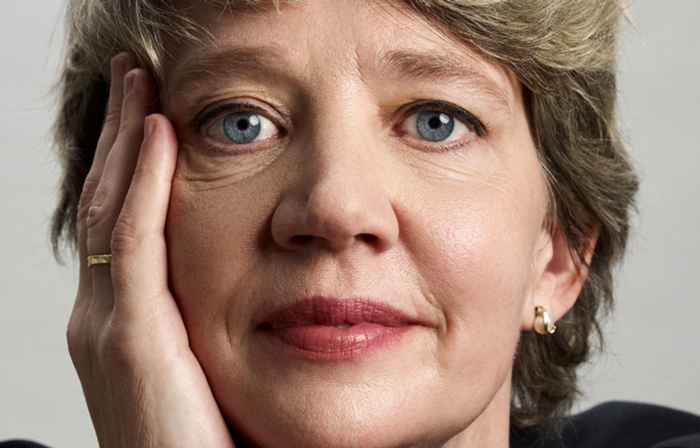
About the speaker
Giselinde Kuipers is research professor of sociology at the Center for Culture, Conflict and Inequality (C3I) at KU Leuven University. Giselinde is a cultural/comparative sociologist who studies frivolous things with serious consequences, such as humor, beauty, memes, cycling, television, journalism and memes. Before coming to Leuven in 2019, she worked at the University of Amsterdam, where she also received her PhD in 2001. She is the Principal Investor of an ERC-funded research project that studies beauty and inequality in five global cities. Recently, he published the open-access Handbook of Beauty and Inequality, co-edited with Outi Sarpila. Currently, she is finishing up a Dutch book called Lelijke Mooie Wereld, which will appear in September 2026.