Screening of Thabyay: Creative Resistance in Myanmar
By Maaike Matelski and Yatun Sastramidjaja
3 March 2026
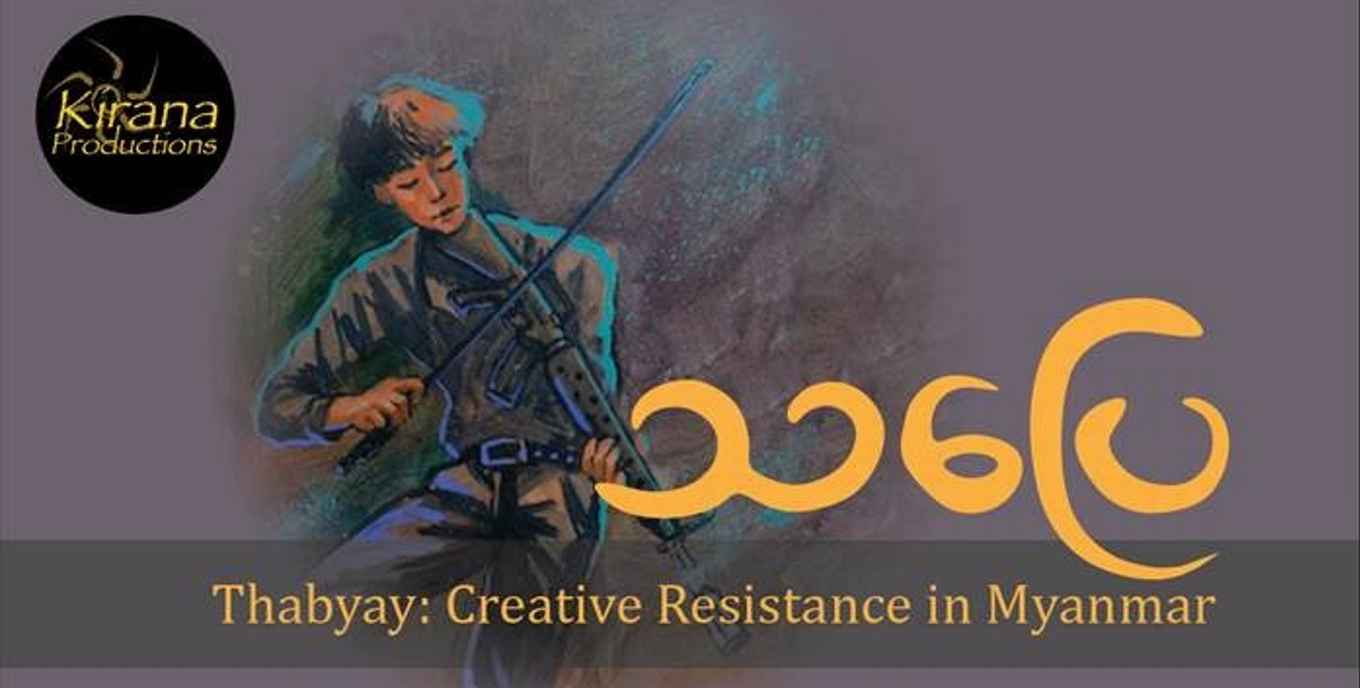
Dealing with trauma through art
The film, which was produced over a period of several years, depicts four veteran activists who saw their lives and roles as activists change after the 2021 coup. The film opens with Phoe San, a violin player who witnessed the military crackdown on unarmed demonstrators and uses his violin to bring comfort and mourn those who were killed in the ongoing crackdown. Since the coup, he has been active at Joy House, a place of refuge and recovery for Myanmar people in the Thai border town of Mae Sot. There, he teaches young refugees to play music instruments and deal with their trauma through various forms of art.
An artist who turned to armed resistance
Next, we meet Maung Saungkha, a poet and vocal activist who was arrested for his mocking of the military before the coup, and who has since become commander of the newly established Bamar People’s Liberation Army (BPLA). He shows his determination but also his sadness as an artist who felt forced to turn to armed resistance. To guard his own sanity amidst the violent struggle and especially that of his young fellow fighters, he fosters a sense of humanity and mutual care among the fledgling soldiers. For him, providing them with books and art in the jungle is no less important than food provision and medical care.
Painting as creative resistance
The third protagonist is Susanna Hla Hla Soe, a human rights activist from the Karen ethnic group who served as Member of Parliament during Myanmar’s brief quasi-democratic era, and then became Minister of Women, Youths and Children Affairs in the shadow body National Unity Government that was formed by exiled activists and politicians after the military coup. The film depicts her visiting schools and shelters for internally displaced people in Myanmar, of which there are now close to four million. She is also depicted using her painting skills as a form of stress relief as well as creative resistance together with other displaced women.
Making a community for displaced people
Lastly, the film depicts Thet Swe Win, who was one of the first to speak out publicly about the plight of the Rohingya in his country before the coup. This long-term human rights activist is now based in Thailand where he established a range of cafés and restaurants with the aim to provide employment for Myanmar migrants and draw attention to the Myanmar situation among Thai and foreign customers. He continuously endeavours to ‘make a community’ among displaced people from Myanmar by providing the space for art exhibitions, hybrid music sessions, and discussions in his venues, as a form of ‘soft power’, he says, not only against the military oppression but also ‘to build a future, better nation for everyone’.
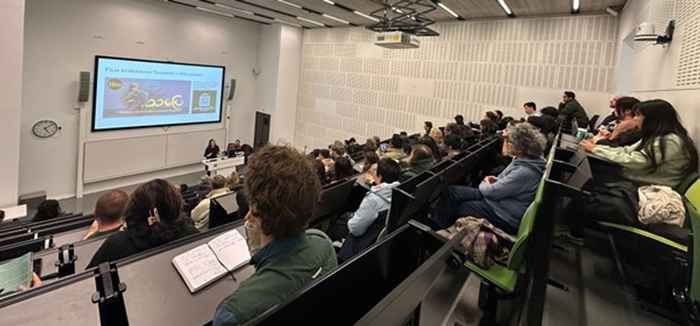
A lively Q&A
The audience consisted of a combination of Myanmar diaspora and interested Dutch and international students, researchers, and other visitors. We were fortunate that Thet Swe Win and the film producer Gregg Butensky were able to join us for a live Q&A after the screening. Questions were asked regarding life in exile, the position of Myanmar migrants in Thailand, and the impact of the sudden withdrawal of USAID and other aid agencies in 2025 – USAID alone was responsible for approximately 30% of the humanitarian and human rights assistance to Myanmar refugees and activists in the region. We also discussed the planned closing of several embassies in Myanmar, including the Netherlands embassy, and speculated on the possibilities of renewed engagement under the new Dutch government.
Questions asked included why the situation in Myanmar so often falls off the international radar, and we discussed practical ways to offer assistance, such as a current fundraiser for Joy House which also lost most of its funding last year. We look back at a successful event and hope that other interested parties will similarly organize a screening so that this impressive documentary can reach the broadest possible audience.